
In most cases, a garage door that reverses or refuses to close is being stopped by its own safety system—usually the photo-eye sensors near the floor, sometimes a worn travel limit setting, and occasionally a spring that's lost enough tension to confuse the opener. Start at the sensors before you assume the worst.
What You're Likely Seeing
The symptoms usually look like one of these:
- The door starts closing, gets partway down, then reverses all the way back up.
- The door closes a few inches, stops, and sits there without reversing or finishing.
- The door won't move at all when you try to close it, though it opens fine.
- The opener light blinks a set number of times (a diagnostic code worth checking against your opener's manual before calling anyone).
Each of these points to a slightly different stage in the system, which is why it helps to check things in the order a technician actually would.
1. Safety Sensors (Photo Eyes)
This is the first thing to check and the most common culprit. Every opener made in the last few decades has two small sensors mounted a few inches off the floor on either side of the track. If their beam is blocked, misaligned, or dirty, the door will refuse to close or will reverse immediately.
In this part of Michigan, fall leaves, dropped tools, bikes leaned against the wall, and early frost on the sensor lenses are all common offenders. Wipe both lenses clean, make sure nothing is in the beam's path, and check that both sensors have a solid, steady light (not blinking). If one sensor was bumped out of alignment—easy to do when moving lawn equipment in and out—you'll usually see one light steady and one blinking or off.
2. Obstructions and Track Condition
If the sensors check out, look at the track itself. Gravel, ice chunks, or road salt residue tracked in from the driveway can build up in the track and cause the door to bind partway down, which the opener reads as an obstruction and reverses to avoid damage. Run a hand along the track (door open) and check for dents or debris. A bent track section, often from an accidental bump with a car or ladder, will cause the same stop-and-reverse pattern even when nothing is blocking the sensors.
3. Close Force and Limit Settings
Openers have adjustable settings that tell the motor how far to travel and how much resistance to tolerate before reversing. These settings can drift over time, especially after temperature swings—and this area sees plenty of those between summer humidity and winter cold. If the limit is set too short, the door will stop before fully closing. If the force sensitivity is too high, normal friction from cold, stiff hardware can trigger a reversal. These settings are adjustable on most openers but are easy to get wrong, since too little force sensitivity creates a real safety hazard.
4. Rollers, Hinges, and Alignment
Worn or rusted rollers add resistance as the door travels, and that added friction can be enough to trip the opener's force sensor. Road salt spray and winter condensation are hard on galvanized rollers over the years. If the door seems to struggle or jerk at the same spot every time, worn rollers or a slightly misaligned track are worth checking before assuming it's electrical.
5. Spring Tension
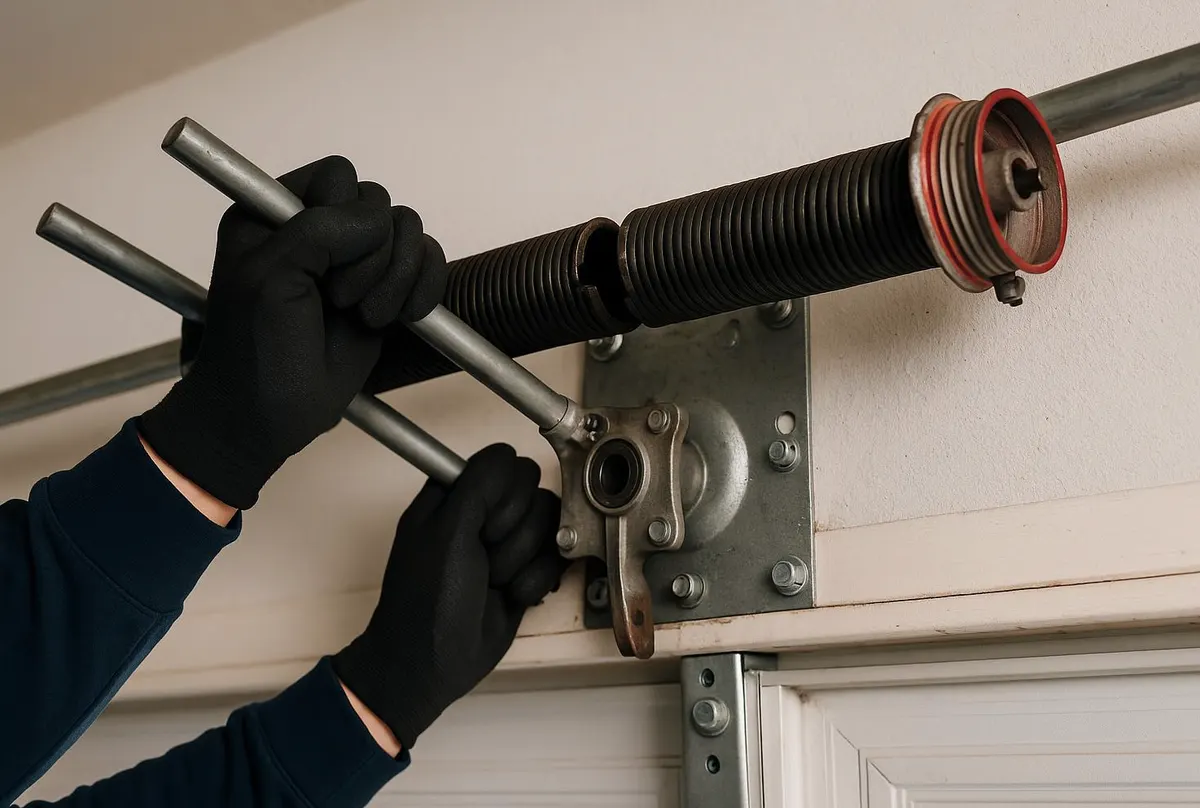
If everything above looks fine, the issue may be the torsion or extension springs. As springs weaken, the opener has to work harder to lift and lower the door, and many openers interpret that extra strain as an obstruction and reverse. This is also a sign the door is close to a full spring failure, which is a bigger job and not one to attempt yourself—broken springs under tension can cause serious injury.
When to Call Spring Lake Door & Opener
If you've checked the sensors and track and the door still won't close reliably, it's time to call. We'll diagnose whether it's a simple sensor realignment, a limit/force adjustment, or a spring that needs replacing, and handle spring replacement safely with the right tools and tension gauges. We also offer garage door opener repair for cases where the logic board itself is misreading signals.
Don't wait until a stuck-open or stuck-shut door turns into a cold morning problem. Call Spring Lake Door & Opener today and we'll get your door closing—and staying closed—before winter settles in.